

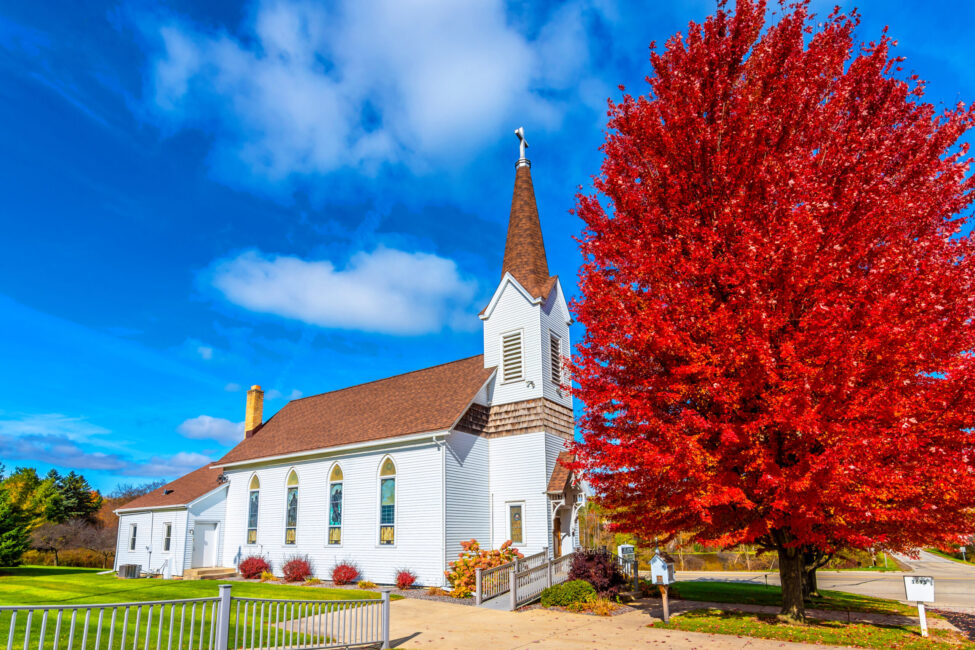
Photo: Adobe Stock
In a huge departure from decades of stringent apolitical interpretation, the Internal Revenue Service has suggested in a new court filing on the federal circuit that houses of worship in the U.S. should be able to endorse political candidates without risking their non-profit status.

“Communications from a house of worship to its congregation in connection with religious services through its usual channels of communication on matters of faith do not run afoul of the Johnson Amendment as properly interpreted,” the filing stated, jointly with the National Religious Broadcasters Association.
The filing was made in the U.S. District Court in East Texas. According to Reuters, the filing stems from an ongoing lawsuit by two Texas-based churches and the NRB against the IRS. The lawsuit was filed last year and aimed to challenge the Johnson Amendment, arguing that it violates First Amendment rights of American churches.

The Johnson Amendment was established in 1954. According to the Institute of Free Speech, it has long been a provision of the tax code that has been used to prohibit “a certain class of nonprofits, including charities and churches, from engaging in candidate election campaigns.”
From the court filing:
“Interpreting the Johnson Amendment to reach such communications would create serious tension with the First Amendment’s Establishment Clause: That broad interpretation would treat religions that do not speak directly to matters of electoral politics more favorably than religions that do so—favoring some religions over others based on their speech to their own congregations in connection with religious services through customary channels of worship and religious communication.”
Churches in America have largely abstained from political rhetoric or endorsements of any kind due to the risk of losing their tax-exempt status by violating the Johnson Amendment.
The IRS’s statement in its filing this week represents a monumental departure from more than 70 years of tax code interpretation, and it opens the door to a broader application of the First Amendment in houses of worship, which have long been hindered by this restriction.
President Donald Trump has long opposed the Johnson Amendment, noting in 2017 at the National Prayer Breakfast that he would “totally destroy” it.
The IRS’s pivotal statement on this issue suggests significant changes in the political winds at the agency.
