

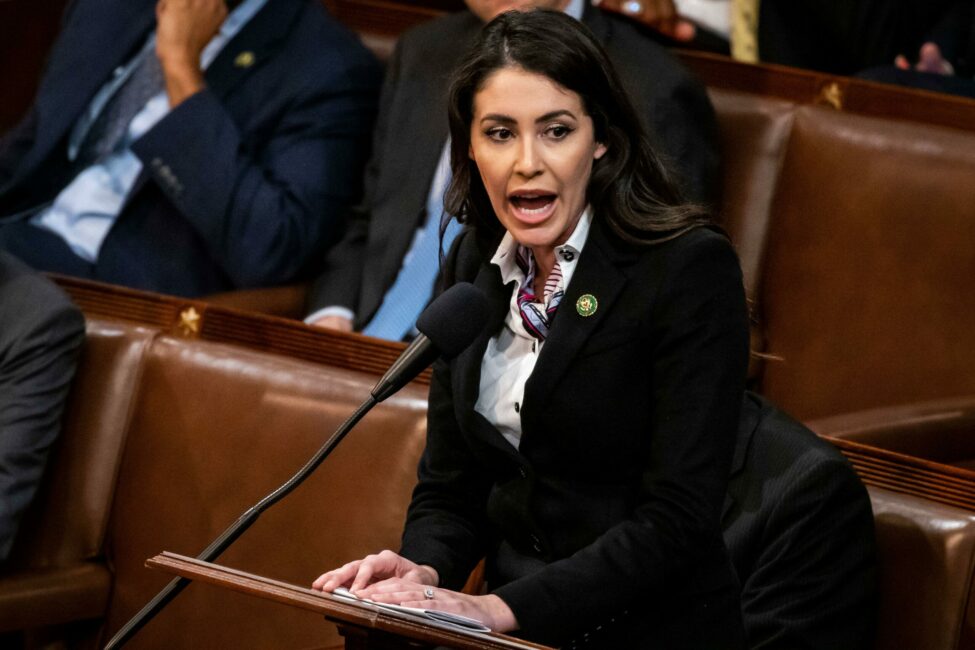
Photo: Alamy
The U.S. House passed an amendment on Thursday that would remove liability protections for pesticide manufacturers, signifying a big win for proponents of the MAHA agenda.

“I do not support giving blanket immunity to corporations at the expense of American families,” said Republican Congresswoman Ann Paulina Luna (Fla.), in a statement.
Rep. Luna introduced the amendment, which will be attached to the current debated “Farm Bill” in the House.

She continued, “Pesticides are linked to a 30% increase in childhood cancer and over 170 studies corroborate the evidence. This amendment ensures we stand on the side of the American people and the health of our nation, not corporate interests.”
The Farm Bill was passed on the House floor in a vote of 224-200. Luna’s amendment was officially adopted into the bill’s final text.
“Great work, @RepLuna,” wrote Rep. Eli Crane, R-Ariz. “I was proud to join this amendment as a cosponsor and support it on the floor. Solid win.”
Rep. Mike Collins, R-Ga., declared, “Americans have the right to eat real, healthy food, free of cancer-causing pesticides and herbicides. Today, I voted to strip toxic chemicals from Americans’ food! It’s common sense.”
Nonpartisan watchdog group Farm Action celebrated the amendment’s passage on X, heralding it as a victory for the American people.
“The People just won and Poison lost,” the organization stated. “Thank you, Rep. Anna Paulina Luna, for leading the charge to defend farmers’ right to sue pesticide corporations when they’re harmed.”
This week, Rep. Luna made her case against pesticide manufacturers’ liability shields on the House floor.
“I never thought I’d have to be debating liability protections for pesticide companies, yet here I am today,” she said.
Stripping liability protections from pesticide producers has been a longtime goal of the MAHA movement. The Farm Bill to which Rep. Luna’s amendment is now attached is simply an extension of the Agriculture Improvement Act of 2018 (renewed in 2024). The latest iteration is an updated version, dubbed the Farm, Food, and National Security Act of 2026.
