

Photo: Alamy
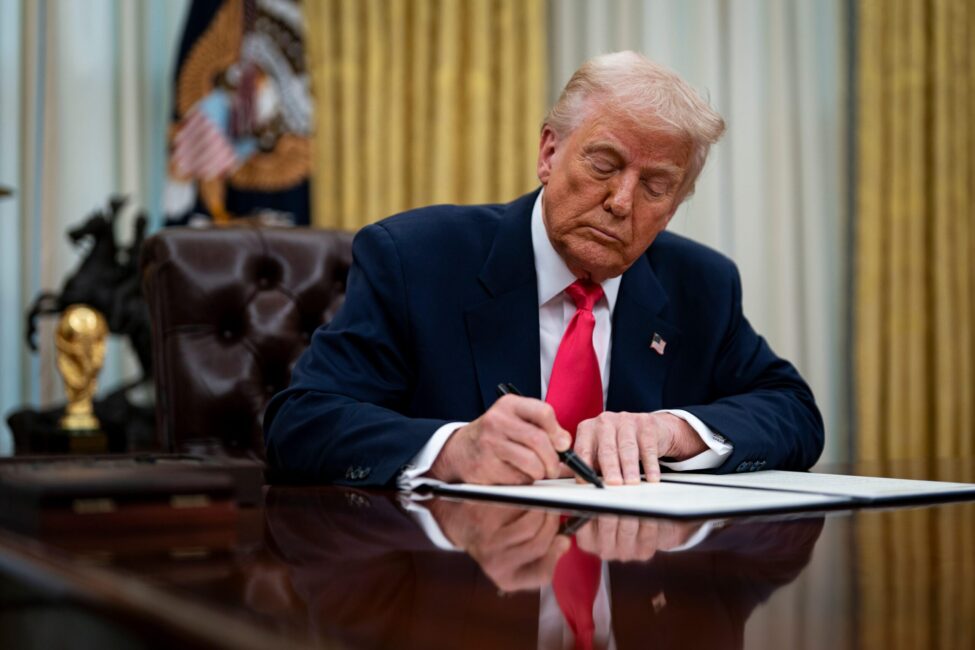
President Donald Trump on Monday signed an executive order lifting U.S. sanctions on Syria, ending restrictions that had been in place for decades and signaling a shift in U.S. policy toward the country’s new leadership.

The order revokes a 2004 national emergency declaration concerning Syria and nullifies five related executive orders.
“The United States is committed to supporting a Syria that is stable, unified, and at peace with itself and its neighbors,” the order stated.

“A united Syria that does not offer a safe haven for terrorist organizations and ensures the security of its religious and ethnic minorities will support regional security and prosperity,” it added.
It also directs Secretary of State Marco Rubio to reexamine Syria’s designation as a State Sponsor of Terrorism, as well as the terrorist classification of Hay’at Tahrir al-Sham. This group ousted former President Bashar Assad late last year. Sanctions on Assad and his allies will reportedly remain in effect.
Trump’s move fulfills a pledge made during a recent trip to the Middle East, where he sharply criticized U.S. foreign policy over the past two decades. The president denounced “interventionists” and “neocons,” accusing them of having “wrecked far more nations than they built.”
United States Ambassador to Turkey and Special Envoy for Syria Tom Barrack said the sanctions are being lifted without preconditions, but noted that Syria’s transitional government is expected to make progress in counterterrorism efforts. That includes working with Syrian Kurdish forces and building ties with Israel.
“Neither the president nor the Secretary of State are nation building, they’re not dictating,” Barrack said. “They’re not giving the framework of the democratic model that needs to be implemented to their architectural desire. They’re saying we’re going to give you an opportunity.”
The Treasury Department stated it retains the authority to reimpose sanctions should Syria fail to meet expectations.
The move come after Trump held a historic meeting in Saudi Arabia with interim Syrian President Ahmad al-Sharaa in May in the first engagement between American and Syrian leaders in over two decades.
The encounter, which took place on the sidelines of Trump’s summit with Gulf Cooperation Council (GCC) leaders, signaled a potential shift in U.S.-Syria relations as Damascus attempts to emerge from decades of isolation.