

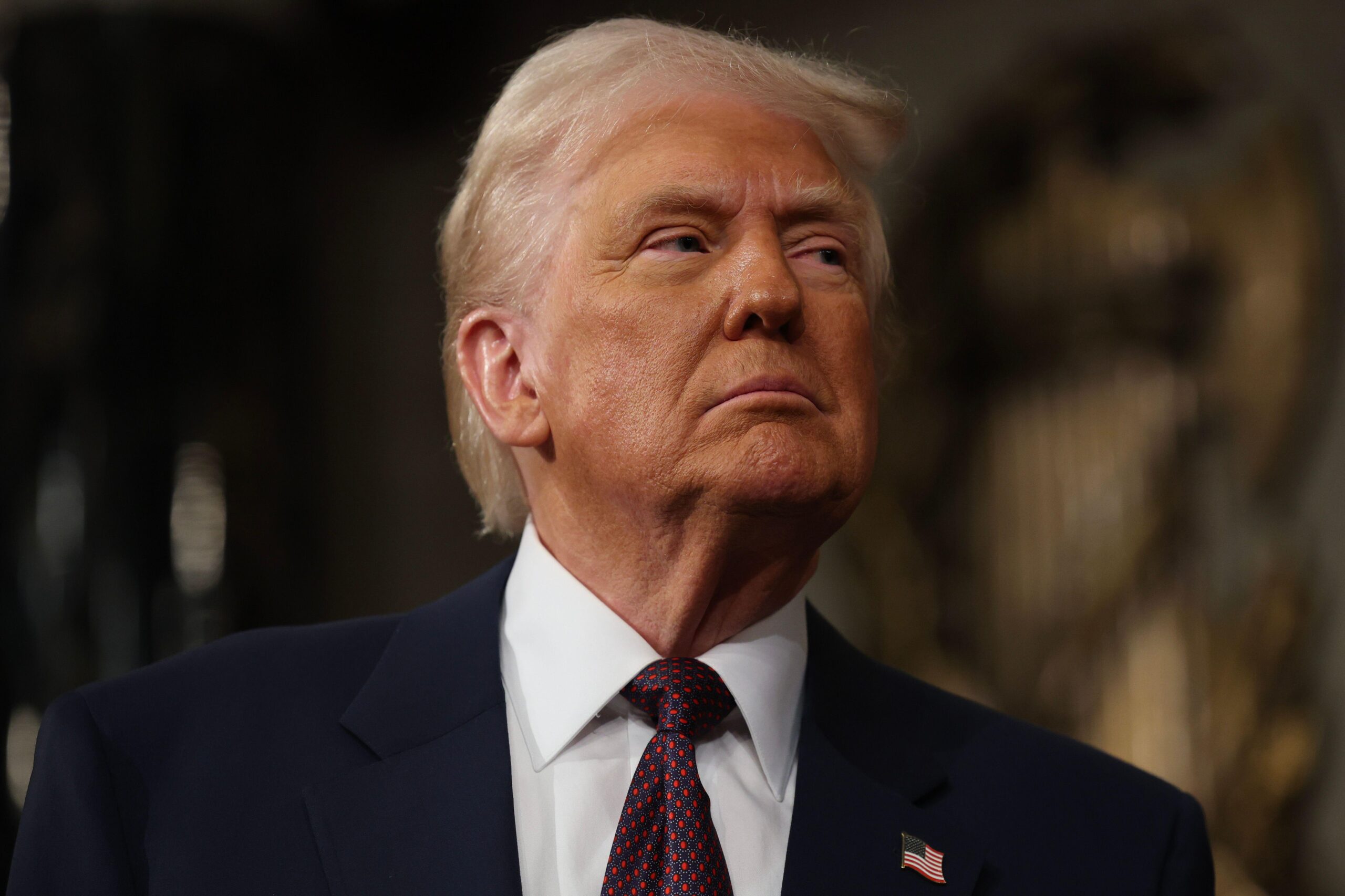
Photo: Alamy
President Donald Trump arrived Monday at the annual G7 summit in France, where he promoted a preliminary agreement aimed at ending the conflict with Iran and said his administration will now turn its attention to resolving wars in Ukraine and Lebanon.

Speaking alongside French President Emmanuel Macron at the summit in Evian-les-Bains, President Trump said the United States and Iran had already signed a memorandum of understanding designed to end hostilities and reopen the strategically important Strait of Hormuz.
The president indicated that some commercial vessels had already resumed transit through the waterway and would be able to pass without paying tolls. With the Iran agreement largely in place, he said his administration is now focused on pursuing diplomatic solutions in other global conflicts.

“We had a very good conversation yesterday with President Zelenskyy and President Putin, and I think maybe we can do something there,” President Trump said. “I really do. I think they’re both open to it.”
The president again noted that Russia should “make a deal” to end the war.
“”Russia should make a deal. Russia’s lost tremendous amounts of people, and so has Ukraine… I spoke with President Putin on Sunday, and it’s sort of the same thing—they just keep going, fighting, losing soldiers… not since WW2 has anything like this happened,” he stated.
The president also expressed interest in helping bring an end to ongoing fighting in Lebanon.
The summit brings together leaders from the Group of Seven nations, who are expected to discuss a wide range of issues, including economic cooperation, artificial intelligence, critical mineral supply chains and ongoing geopolitical conflicts.
While some leaders welcomed progress toward reducing tensions in the Middle East, Trump’s arrival comes amid broader concerns among allies regarding U.S. trade policy, including recent tariff threats directed at France and other trading partners.
The reopening of the Strait of Hormuz remains a major focus for world leaders because the route serves as one of the world’s most important corridors for oil and natural gas shipments. Any sustained disruption has the potential to affect global energy markets and economic stability.