

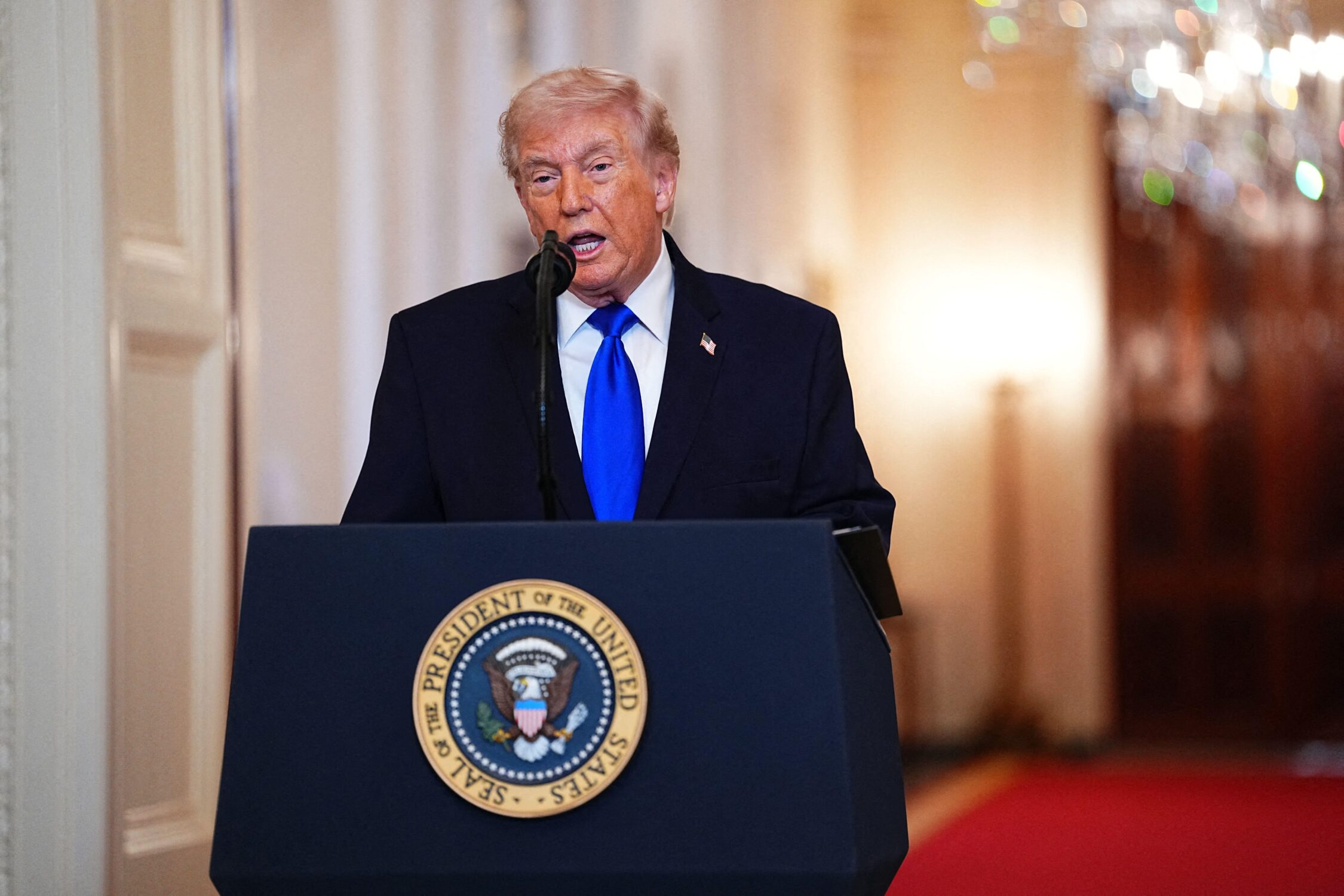
Photo: Alamy
President Donald Trump said Wednesday he opposes transferring Iran’s stockpile of highly enriched uranium to Russia or China as part of a possible agreement aimed at ending the conflict involving Tehran’s nuclear program.

“No, I wouldn’t be comfortable. That would not make me comfortable,” the president said during a Cabinet meeting.
Russia has repeatedly proposed removing Iran’s enriched uranium stockpile since U.S. and Israeli strikes targeted Iranian nuclear facilities in June 2025, according to reports from The Moscow Times. Moscow has renewed the proposal during the current conflict.

The uranium is believed to remain beneath debris at bombed nuclear sites, though experts say the material could still potentially be weaponized relatively quickly.
Iran has also reportedly considered transferring the uranium to China. Mao Ning addressed those reports during a briefing Tuesday, saying China remains willing to play a constructive role in resolving the Iranian nuclear issue, according to China’s state-run Global Times.
Mao said Beijing also seeks to preserve the international nuclear nonproliferation system and promote stability in the Middle East and globally.
The International Atomic Energy Agency has estimated Iran possesses about 440.9 kilograms, or 972 pounds, of uranium enriched to 60 percent.
That level is significantly above the 3 to 5 percent enrichment typically used for civilian nuclear energy and higher than the roughly 20 percent sometimes used for research purposes, though still below the approximately 90 percent enrichment generally considered weapons-grade.
President Trump also said the United States is not discussing sanctions relief or direct financial concessions for Iran as part of any agreement.
“No sanctions, no money, no nothing,” President Trump said. “We have control of money that they claim is theirs, will keep control of that money when they behave properly, and when they do what’s right, we’ll let them have their money.”
“But right now, we’re not doing that. One thing is not contingent on the other,” he added.