

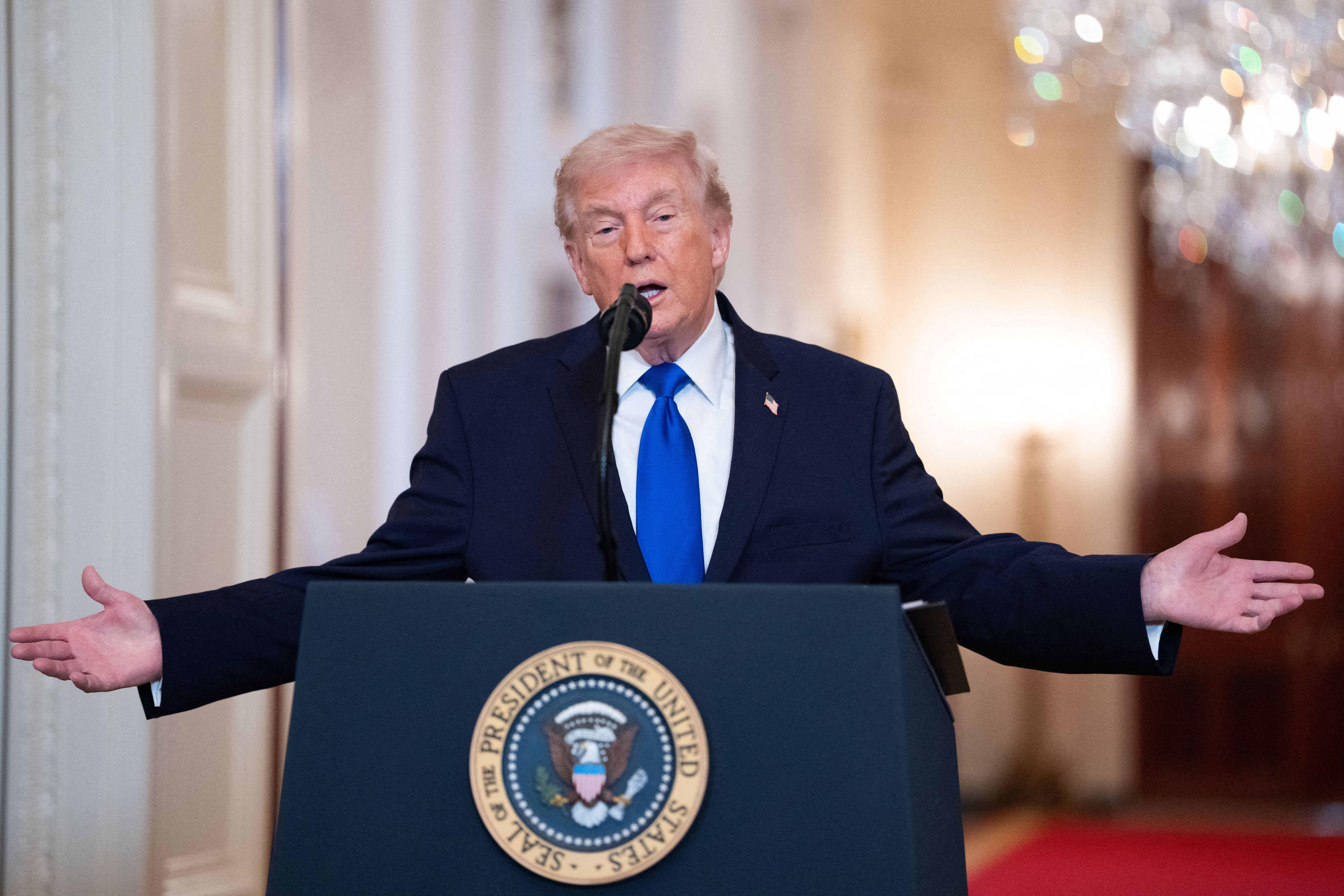
Photo: Alamy
President Donald Trump on Sunday called for a federal lawsuit challenging parts of his planned White House ballroom project to be dropped, pointing to a shooting outside the White House Correspondents’ Association dinner on Saturday as evidence that presidential events should be held on secured grounds.

The project remains under court review, and the suspect in Saturday night’s incident is in custody. The president has said construction of what he described as a “Militarily Top Secret Ballroom” should move forward quickly.
In a Truth Social post, President Trump argued the incident near the Washington Hilton underscored the need for a secure venue on White House property.

“What happened last night is exactly the reason that our great Military, Secret Service, Law Enforcement, and, for different reasons, every President for the last 150 years, have been DEMANDING that a large, safe, and secure Ballroom be built ON THE GROUNDS OF THE WHITE HOUSE,” he wrote.
He said the proposed structure would include extensive security features.
“While beautiful, it has every highest level security feature there is plus, there are no rooms sitting on top for unsecured people to pour in, and is inside the gates of the most secure building in the World, The White House,” he added.
President Trump also criticized the legal challenge, calling it a “ridiculous Ballroom lawsuit, brought by a woman walking her dog, who has absolutely No Standing to bring such a suit,” and said it “must be dropped, immediately.”
He added that “Nothing should be allowed to interfere with its construction, which is on budget and substantially ahead of schedule.”
The lawsuit was filed in December 2025 by the National Trust for Historic Preservation in the U.S. District Court for the District of Columbia. The plaintiff referenced by Trump is Alison Hoagland, a board member of the group, who argued that the demolition of the East Wing and planned construction would disrupt her use and view of the area.
A federal judge found those claims sufficient to grant a preliminary injunction blocking parts of the project.
Richard Leon issued that injunction on March 31, finding the project likely required congressional approval. The U.S. Court of Appeals for the D.C. Circuit later allowed construction to continue temporarily while remanding the case for further clarification of the security-related exceptions.