

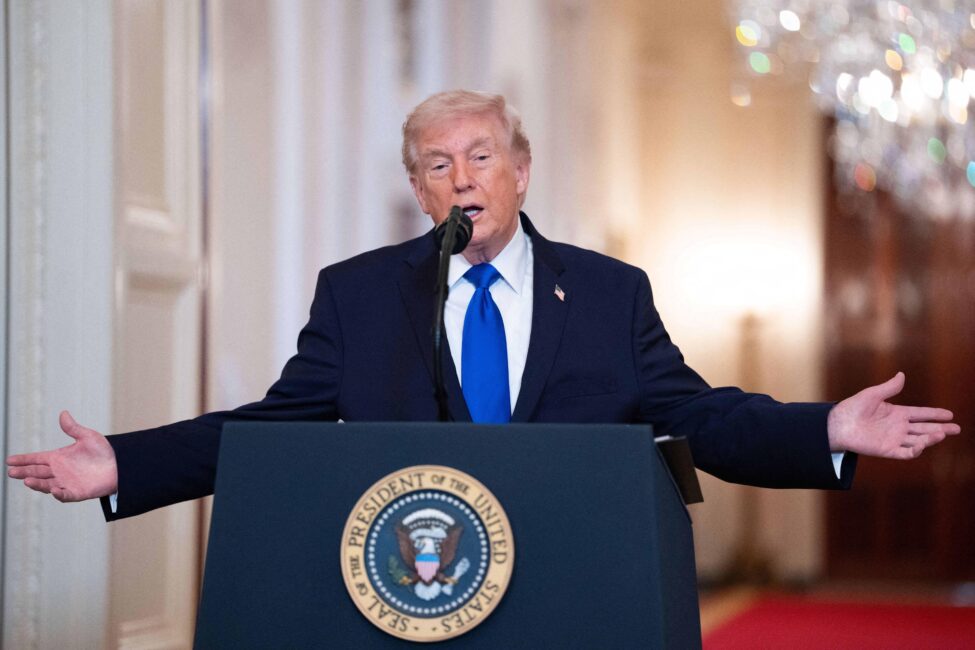
Photo: Alamy
President Donald Trump said Tuesday that he hopes additional Middle Eastern nations will join the Abraham Accords following recent progress in negotiations with Iran, arguing that reduced regional tensions could pave the way for broader diplomatic normalization with Israel.

Speaking at the G7 summit in France alongside United Arab Emirates President Sheikh Mohamed bin Zayed Al Nahyan, the president praised the nation’s role in the accords and expressed optimism that more countries will participate.
“I’d love to have them,” President Trump said when asked whether other nations have discussed joining the agreement. Referring to the UAE leader, he added, “He was early in. And he’s done very well with them, the Abraham Accords.”

The Abraham Accords were a signature foreign policy achievement of President Trump’s first term. The agreements normalized relations between Israel and several Arab nations, including the United Arab Emirates, Bahrain, Sudan and Morocco.
President Trump suggested that Iran’s influence had been a major obstacle to broader participation.
“The big impediment to the Abraham Accords … was a place called Iran,” he said. “I understand that it’s a little bit tough when people were afraid of Iran. But I think they’re all going to start coming in there.”
The comments come days after the United States and Iran agreed to a 60-day memorandum of understanding designed to halt hostilities while negotiators work toward a broader peace agreement.
The president previously called for more nations to join the accords in a May post to Truth Social, including Saudi Arabia, Qatar, Pakistan, Turkey, Egypt, and Jordan.
Trump noted that none of the original Abraham Accords participants withdrew during the recent conflict involving Iran, which he described as evidence of the agreements’ durability.
The administration views the accords as a cornerstone of its Middle East strategy, with supporters arguing that expanded diplomatic and economic ties between Israel and Arab states could help stabilize the region and reduce the likelihood of future conflicts.