

Photo: Adobe Stock
Every few months, the national media brings forth information about a new scandal, often directly connected to Washington, D.C. The details may change, but the public reaction is almost always similar: frustration and a growing distrust of those in positions of authority.

From the Epstein files to the lack of accountability among elected members of Congress, Americans are growing tired of corruption.
This is not a Democrat or Republican issue; it is a human problem that reaches back to the ancient reflections of Socrates and questions of human ethics. Is there a time in modern politics when a congressional representative is not under investigation for ethical behavior, whether it involves abusing funds, insider trading, or moral violations in their personal lives? Even at the local level, Minneapolis now appears to be heading into what could become a multi-year investigation involving allegations of fraud and misuse of public funds.

The reader is left to ask whether the Founding Fathers anticipated such corruption at the national or even state level. Surely, they knew mankind was not born without error or fault. This is evident in the writings of Thomas Jefferson and Patrick Henry. Nevertheless, the scale of modern corruption and the protection of elites seem to have engulfed the political arena at levels almost unrecognizable to the Founders.
It is evident that the Founders embraced a republic that required moral virtue among its citizens and leaders. In fact, John Witherspoon, the only clergyman to sign the Declaration of Independence, was known for connecting moral philosophy to politics. He did not invent the concept, but he strengthened the idea that moral principles must guide government, drawing from the ancient teachings of the Greco-Roman world. Government has an obligation to care for its citizens under the principles of God Almighty and, in this country, under the United States Constitution.
One of the greatest fears among the Founders was that corruption could tear the nation apart from within. To them, religion, morality, civic virtue, and even personal responsibility were not only foundations of liberty but the principles necessary for its survival.
Without character or trust, even the best political system begins to weaken and crumble, as history reminds us in the fall of the Roman Empire.
To be clear, most Americans do not trust the American government. From both political parties always pointing fingers at the other side to the media—often described as the fourth branch of politics—ignoring crucial news stories or even omitting facts, Americans are left to decipher information on their own and often remain unsatisfied in their pursuit of the truth.
The very makeup of America’s exceptionalism, the university system, is not far from a legitimate critique of corruption. Americans are being educated far from a classical approach of asking questions and disagreeing without penalty. Higher education and even parts of the public school system are creating a one-dimensional form of instruction, arguably leading to a growing disdain for America and its patriotic foundations.
Change in a system so far gone requires strong leaders who hold the media, politicians, and even the educational system accountable for their failures. The American people seem to be doing this already in regard to educational corruption, with an all-time high of students entering alternative schooling, from charter schools to private schools, and homeschooling. In many parts of the country, parents are fighting back against indoctrination.
If only America’s politicians grew stronger to resemble America’s parents. Washington has had some strong voices, from Trey Gowdy to Marjorie Taylor Greene, who have been critical of the makeup and corruption within. Similarly, Maine’s Blue Dog Democrat Jared Golden has spoken about how the culture of Washington can become morally exhausting.
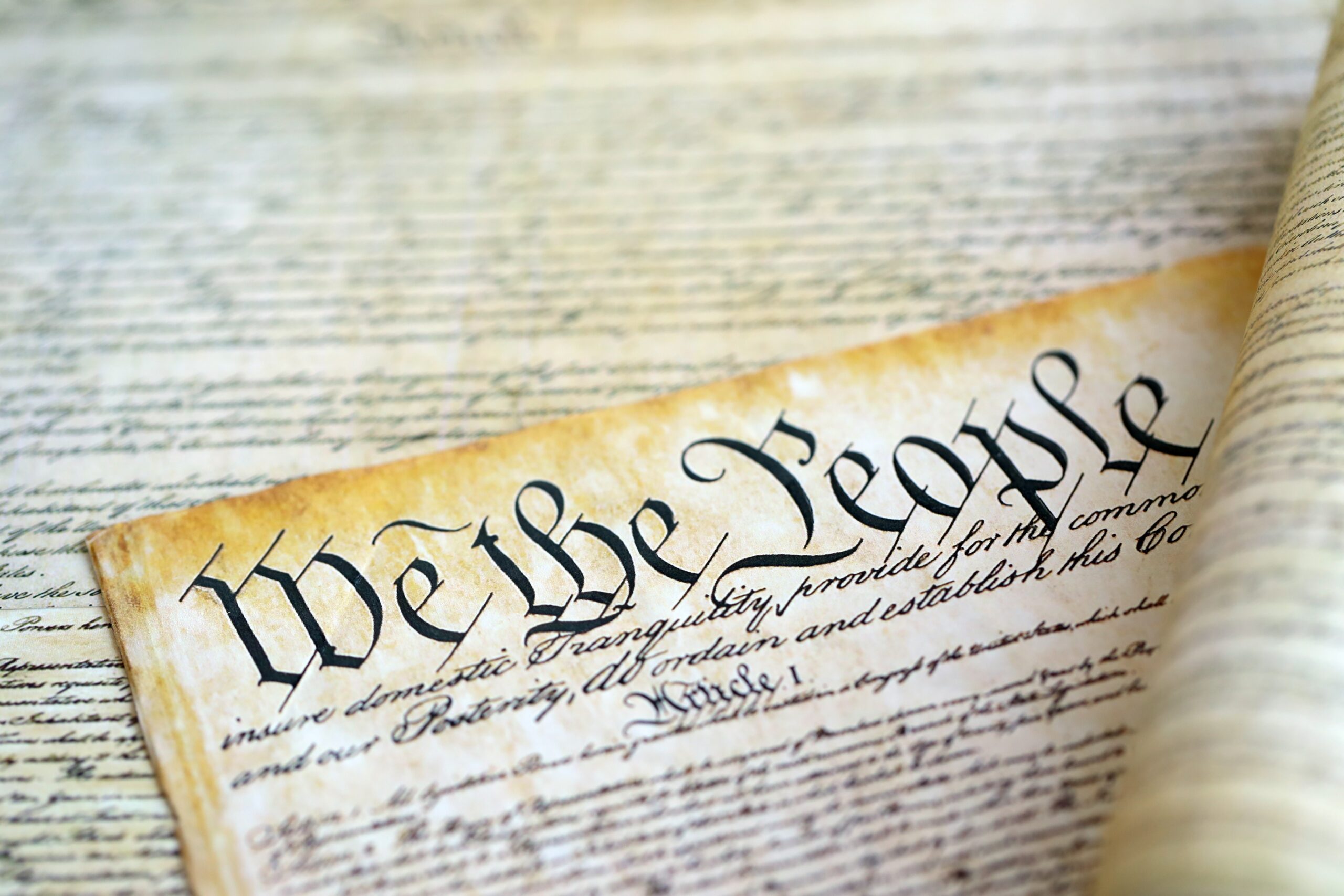
The American people have the power to enforce accountability. The future of America will be shaped by those who represent We the People in office. While the average citizen can impact the nation’s future by restoring morality and virtue, politicians must return to the system envisioned by the Founders, serving as true representatives of the people rather than members of an elite class seeking to leave Washington more powerful than when they entered.
America’s crisis today is not simply political; it is moral. A nation cannot long endure when corruption becomes expected, and character becomes secondary to power. The Founders understood that a republic would only survive if its leaders and its citizens possessed virtue and restraint. If America is to repair this crisis of character, both the people and those they elect must return to the principles that built the nation in the first place: accountability, moral leadership, and a renewed commitment to the ideals of We the People.