

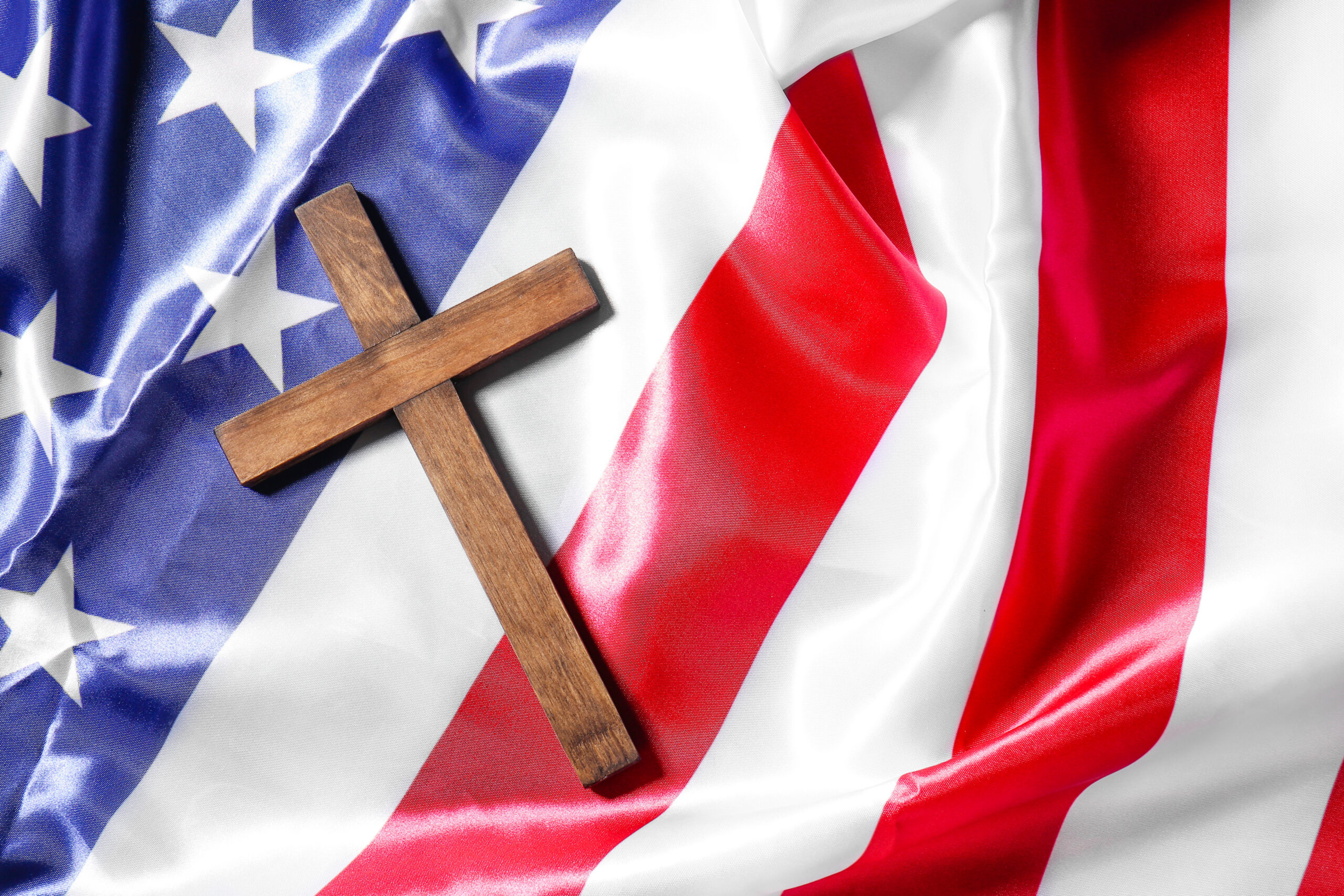
Is there a growing wave of evangelical support for President Donald J. Trump in the presidential race?
That’s precisely what Ralph Reed, the founder and former Faith and Freedom Coalition executive director, argued in a recent interview.

If Reed’s assertion is on point, what does that mean for the 2024 election?
First, many Christians, even well-known names, sat out the 2016 election or voted for a third-party candidate. One example is Albert Mohler, the former president of the Southern Baptist Convention and current president of the Southern Baptist Theological Seminary. Mohler had a change of heart in the 2020 race and publicly supported Trump. He wrote a letter urging his followers to do the same.

Christian turnout in 2024 will likely be similar to 2020.
“Religion and Christianity are the biggest things missing from this country,” Trump said in one video promoting the importance of the Christian Bible.
Statements like these are what drive Christians to support and advocate for Trump.
Louisiana’s decision to reintroduce the Ten Commandments in public schools last week has put Christianity and its principles at the center of the election for Evangelicals. While such measures will face legal battles and maybe even reach the Supreme Court, it’s apparent that Christian conservatives are fighting back against a liberal Western society that has declared war on Christian principles and standards.
“During the Saturday Faith and Freedom event, he also promised to create a task force to fight anti-Christian bias, including support for pro-life activists,” wrote Dillon Burroughs of RSBN.
While Christians are well aware that no candidate is perfect and might not represent their convictions or political persuasion in its entirety, the evangelical community is taking notice of not only Trump’s vocal support of their faith but also his actions both now and when he was in office.
Sure, people might accuse Christians of being single-issue voters and of fighting vigorously for the pro-life movement or the societal standards underlined in the Scriptures. These strong convictions might fuel their political engagement, but for many, they shape the destiny of their nation.
The general understanding is that God refuses to bless any land that blatantly disregards His commandments and teachings.
Clearly, not all Republicans or their positions reflect the teachings of Jesus Christ. Despite this, Christians are questioning their alignment with the present-day Democratic Party. Similarly, does voting for a third-party candidate impact an election negatively for Christians where such narrow margins could determine the next president?
At present state, the Republican Party still welcomes Christians, and Trump has embraced them with wide-open arms, underscoring that there is one single party where they can exist and even continue to form a large part of the conservative base.
The national GOP site confirms this:
“The principles of the Republican Party recognize the God-given liberties while promoting opportunity for every American.”
Don’t underestimate the link between political liberty and Christianity. Jesus Christ’s death, resurrection, and promises serve as a reminder of freedom from tyranny, government control, and sin. Christians uphold In God We Trust, opposing big-government rule and authority.
Although some Christian voters may stay silent politically, most strongly support President Donald J. Trump, seeing this election as an opportunity to restore the country’s founding principles through biblical Christianity.
The 2024 election holds significance for Christians, as it determines the future of the United States and provides an opportunity for future generations to continue the rich and historic legacy established by their past Christian patriot ancestors. Christians long for a land that not only embraces God’s ways but also serves as a beacon of light in a world overwhelmed by darkness and sin.