

Photo: Alamy | Analysis by Summer Lane
President Donald Trump’s visit to China has been the center of the world’s attention, and for good reason: the results yielded from this key summit will impact America, global trade, and the fate of nations like Iran and Taiwan.
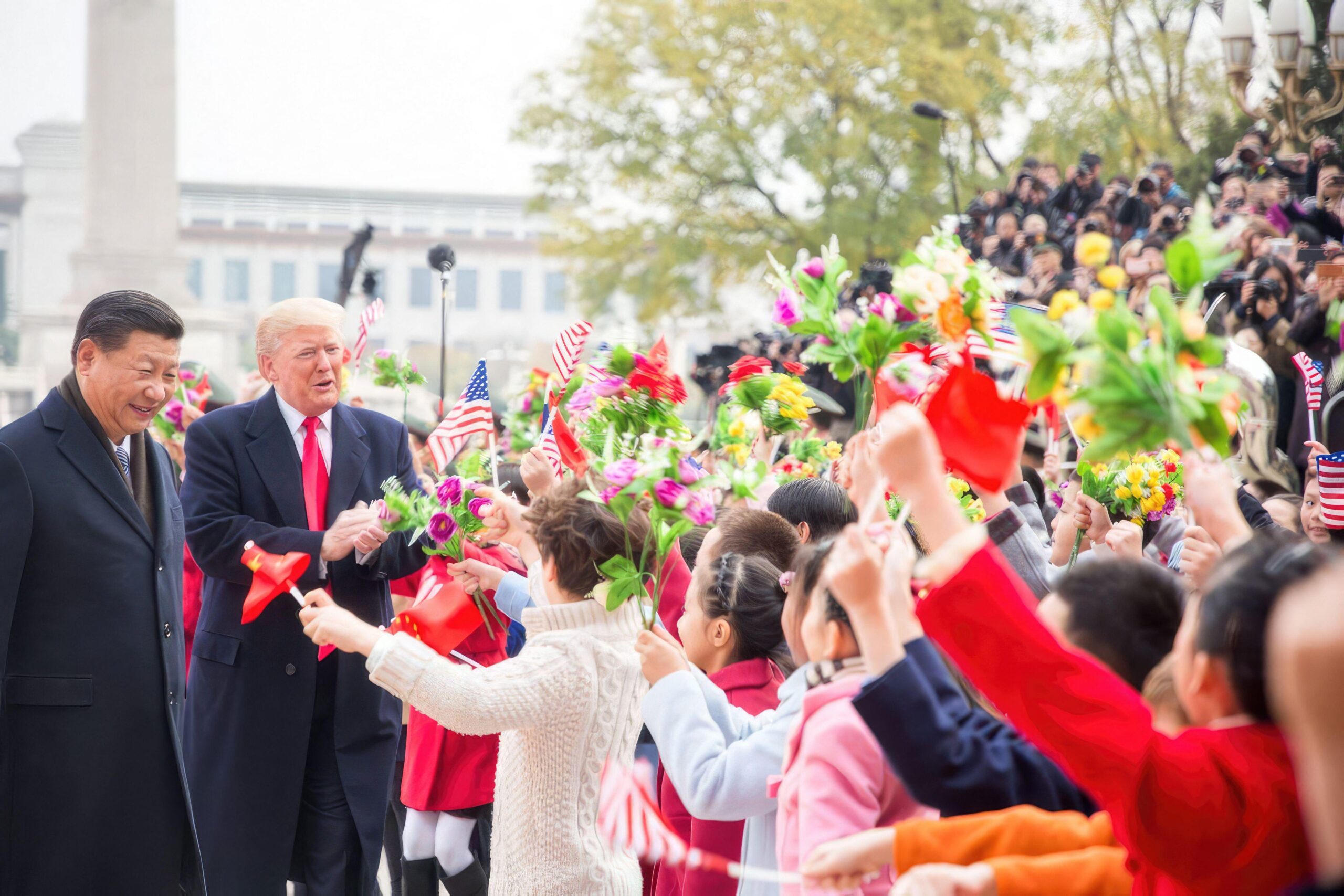
The president’s arrival on Wednesday was colorful and exciting. He brought along a slate of high-level billionaires like Elon Musk (Tesla) and Tim Cook (Apple) to illustrate America’s business power while meeting with Chinese President Xi Jinping.
The stakes are high. The world is waiting for a resolution to the war in Iran. Trade and business policies between China and the U.S. are highly competitive and, at times, nearly war-like in intensity. And President Xi, whether one likes him or not, is a very strong and very smart leader – someone to be dealt with carefully, and with great respect, considering the tenuous situation.
All of these factors and more have played into President Trump’s political strategy in Beijing, which appears postured to cement a friendlier relationship with the Chinese.
China and U.S. stand to change relationship
Both President Trump and President Xi have their own agendas when it comes to this summit in Beijing. President Trump most notably has the Iran War on his mind – with the Strait of Hormuz still closed, he has indicated that he would be amenable to allowing the Chinese to help mediate its reopening.
“Xi would like to see a deal made…he did offer, he said, ‘If I can be of ANY help at all, I would like to be of help,’” President Trump told Fox News on Thursday, following talks with Xi.
The president suggested that Chinese interests were driven by the nation’s large purchasing history of oil from Iran.
China brings leverage to the negotiating table when it comes to the Strait of Hormuz. Securing its safe reopening has remained a sticking point for the Trump administration, and is, of course, a top priority for the stability of the global economy.
“A stable, bilateral relationship is good for the world,” President Xi said during translated remarks at a banquet honoring President Trump. “China and the United States both stand to gain from cooperation and lose from confrontation. We should be partners, not rivals. We should help each other succeed and prosper together and find the right way for major countries to get along well with each other in the new era.”
President Xi takes a swing at U.S. hegemony
A key takeaway point from these talks so far is President Xi’s comments about a “new era” of global power. It suggests something deeper than mere bilateral friendliness. It suggests that Xi strongly believes that China sees itself as a rising superpower, eyeing the United States as an equal on the world stage. The aim here on Xi’s part is to break up the United States’ decades-long global hegemony.
Amid America’s war with Iran and China’s subsequent offer to reopen the Strait of Hormuz, this puts Xi on a much stronger footing, making him both a potentially powerful friend and an equally dangerous enemy.
Against this backdrop of thinly veiled competition, President Trump spoke glowingly of the relationship between China and the United States, leaning into the friendly tone in Beijing this week.
“Across the centuries, this mutual esteem grew into a relationship that reflected the tremendous talent and potential of our two people. Chinese workers helped lay the railroad tracks that connected our Atlantic Coast to the Pacific,” President Trump said in his remarks at the honorary banquet.
President Xi’s warm reception of President Trump and his cabinet, while seemingly cordial enough, was counterbalanced by a chilling warning.
Xi suggests American power is waning
It’s no secret that China aims to take Taiwan – eventually. Xi clearly sees the global turbulence and unrest unleashed by war with Iran as an opportunity to broaden Chinese horizons.
“Currently, transformation not seen in a century is accelerating across the globe, and the international situation is fluid and turbulent,” Xi said during a meeting with President Trump and his cabinet on Wednesday. “The world has come to a new crossroads.”
In these remarks, Xi wondered aloud if China and the U.S. could avoid the “Thucydides Trap.” This illustration is a theory popularized by Graham Allison, an American political scientist. At its core, it describes the extremely dangerous situation and high likelihood of war and violence that occurs when one rising superpower threatens to eclipse an established one.
By making such a comment, Xi made his position clear, asserting that he sees China’s power rising and America’s as waning. According to The New York Times, Xi warned President Trump that if the U.S. interfered with China’s aspirations with Taiwan, it could become a very “dangerous situation.”
This suggests that talks in Beijing were publicly cordial, but perhaps far more heated behind closed doors.
Early reported wins
Following initial talks with Xi, the White House released a statement reporting the “good meeting” between President Trump and the Chinese leader.
“The two sides discussed ways to enhance economic cooperation between our two countries, including expanding market access for American businesses into China and increasing Chinese investment into our industries,” the statement noted. “Leaders from many of the United States’ largest companies joined a portion of the meeting.”
Other topics discussed, per the White House, were the flow of fentanyl precursors into the United States, increasing American agricultural products into China, and agreeing that Iran “can never have a nuclear weapon.”
Another report early Thursday morning from Fox News cited several more alleged wins that President Trump secured from the Chinese: their help on the Iran War, along with increased Chinese purchases of soybeans, U.S. oil, LNG, and “200” Boeing jets.
A surprise invitation
During remarks at the special banquet in Beijing amid the summit, President Donald Trump announced that he was inviting President Xi Jinping and his wife, Peng Liyuan, to visit the White House this fall.
“Tonight it is my honor to extend an invitation to you and Madame Peng to visit us at the White House this September 24th,” Trump stated.
He also proposed a toast to the “rich and enduring ties between the American and Chinese people,” describing it as a “very special relationship.”
Such a trip would be historic. Chinese presidents have certainly visited America in recent decades, but no Chinese leader has visited the White House since President Barack Obama hosted Xi in 2015.
As reported by RSBN, if President Xi accepts, it would mark a third in-person meeting between President Trump and the Chinese leader during this second term.
