

Photo: Alamy | Analysis by Summer Lane
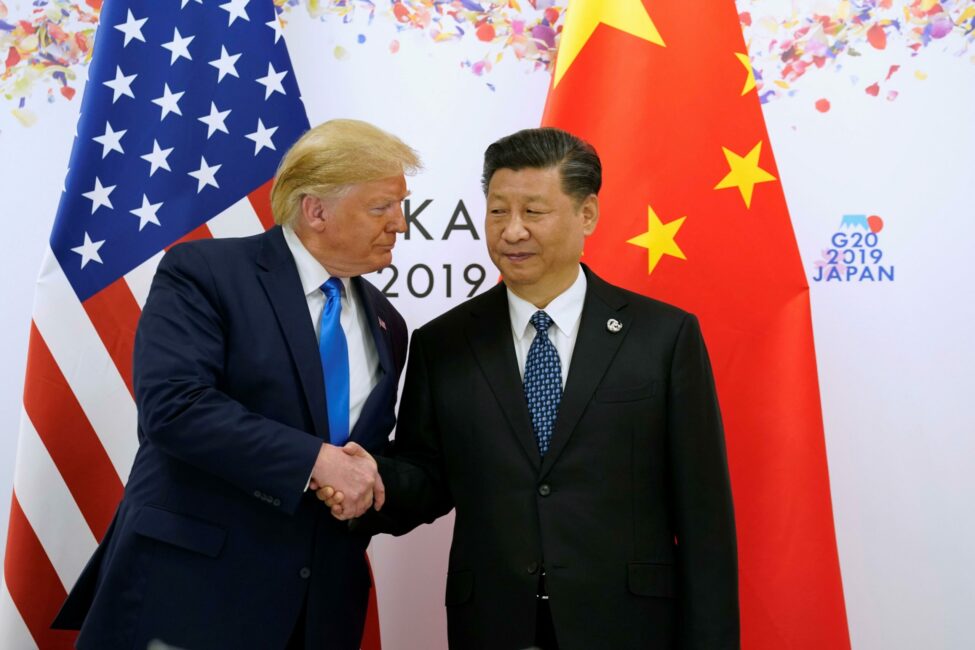
As President Donald Trump arrived in Beijing, China, this week, greeted with a robust amount of pomp and cultural regalia, the stakes for the United States have never been higher.
The president will participate in a two-day summit with Chinese President Xi Jinping, with talks expected to center largely around trade and business. The meeting between President Trump and Xi comes at a pivotal moment for America on the world stage.
As war with Iran simmers amidst a paper-thin ceasefire and President Trump enters Beijing without the power of heavy tariffs to bolster his foreign policy (the U.S. Supreme Court stripped his authority to levy such international tariffs in February), the negotiating table looks a little different than it did just six months ago.
What role will China play when it comes to the conflict in the Middle East? Will China help the United States or hinder peace efforts? It’s hard to say, but one thing is for certain: the clouds of war hanging heavy over Beijing this week may make diplomacy a bit more fraught.
What to expect
President Trump’s visit to China was postponed earlier this year due to the launch of Operation Epic Fury. Topics that remain close to the surface are the situation with Taiwan, the technological race to develop artificial intelligence (AI), the fentanyl crisis, and, of course, trade between the U.S. and China.
On Wednesday, The New York Times reported that a Chinese-flagged ship, the Yuan Hua Hu, was spotted transiting the Strait of Hormuz. The timing is curious, considering the overall stagnation in the Strait since the onset of the war in late February, although there has been some maritime traffic in the passage for some nations generally on friendly terms with Iran, like China.
Could this work to the United States’ advantage? The Trump administration has publicly pressured the Chinese government to diplomatically get involved in pushing Iran to reopen the Strait of Hormuz for global transit.
“The threat of attacks from Iran has closed the Strait. We are reopening it. So, I would urge the Chinese to join us in supporting this international operation,” U.S. Treasury Scott Bessent said in a recent interview.
So far, Pakistani mediation has yielded no concrete diplomatic results in negotiations with Iran, so it is possible that President Donald Trump may discuss ways that China could help reopen the Strait of Hormuz. This gives China some negotiating leverage, to be sure, and will likely create a livelier discussion between President Trump and President Xi.
POTUS brings power players along
“We have Iran very much under control,” President Trump told reporters on Tuesday, before departing for Beijing.
Projecting power, the president also brought a cadre of business behemoths along for the trip to China, titans like Tesla’s Elon Musk and Apple’s Tim Cook. The delegation is no doubt postured to both intimidate and influence the direction of business discussions with China – a smart move on President Trump’s part.
The president may try to seal a deal with China similar to the massive investment agreements he brokered in the Middle East last year – commitments worth billions of dollars. Per the NYT, Beijing and the U.S. are allegedly considering a $1 trillion Chinese investment into the U.S. in the form of factories. There is no way to know if such a deal is really being considered, but it wouldn’t be shocking if it were. After all, in 2025, President Trump secured a whopping $1.2 trillion investment from Qatar, as reported by RSBN.
At the end of the day, whether a big deal or a series of small ones are made or not, expect the focus in Beijing over the next few days to remain centered on the high-stakes war with Iran, Taiwan, American imports (like soybeans and other agricultural products), and key Chinese exports (like rare earth minerals).
