

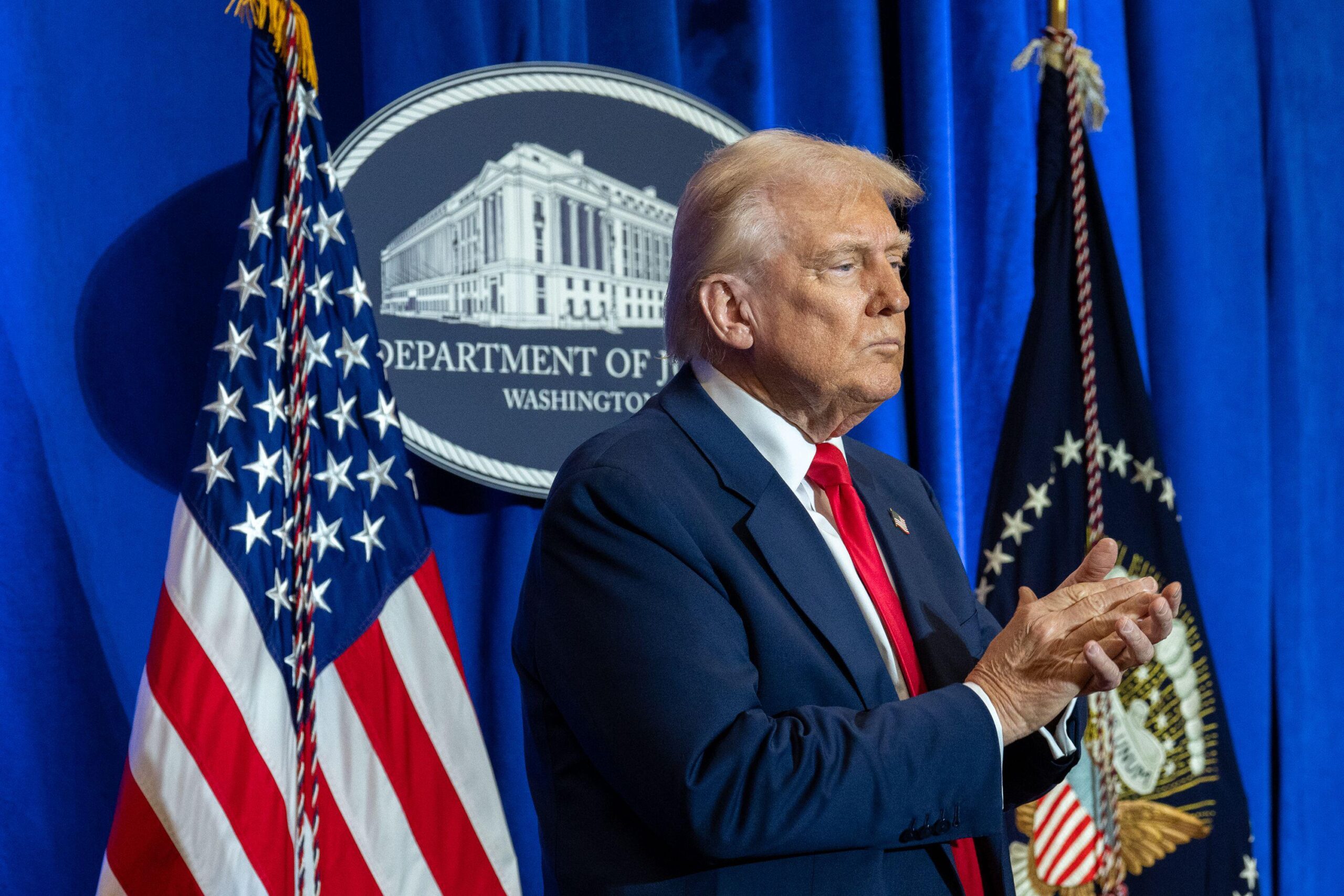
Photo: Alamy
President Donald Trump on Wednesday directed the Department of War to immediately resume nuclear weapons testing, ending a three-decade pause on full-scale tests in the United States. The announcement came just before his scheduled meeting with Chinese President Xi Jinping.

The United States last conducted an underground nuclear test in 1992 at the Nevada Test Site, after which testing ceased under a voluntary moratorium.
“Because of other countries testing programs, I have instructed the Department of War to start testing our Nuclear Weapons on an equal basis,” President Trump wrote in a social media post Wednesday. “That process will begin immediately.”

He added, “The United States has more Nuclear Weapons than any other country. This was accomplished, including a complete update and renovation of existing weapons, during my First Term in office. Because of the tremendous destructive power, I HATED to do it, but had no choice! Russia is second, and China is a distant third, but will be even within 5 years.”
The decision reverses a long-standing U.S. policy of refraining from full-scale nuclear tests while relying on advanced computer modeling and subcritical experiments to ensure the reliability of the country’s arsenal. The move also comes as tensions have grown between the U.S., Russia and China over nuclear modernization programs and arms control agreements.
According to an April report by the Congressional Budget Office, maintaining and upgrading the U.S. nuclear stockpile is expected to cost $946 billion from 2025 through 2034, totaling about $95 billion per year. That total includes funding for the Departments of War and Energy to operate, sustain, and modernize nuclear forces and develop new weapons.
President George H. W. Bush first instituted a unilateral ban on nuclear testing in 1992. President Bill Clinton later signed the Comprehensive Nuclear Test Ban Treaty in 1996, though the Senate never ratified it.
Since then, the United States has conducted subcritical experiments to assess the safety and reliability of its weapons without producing a nuclear explosion, according to the Department of Energy’s National Nuclear Security Administration.
The announcement also comes shortly after Russia confirmed testing its “Poseidon” nuclear-powered underwater drone.