

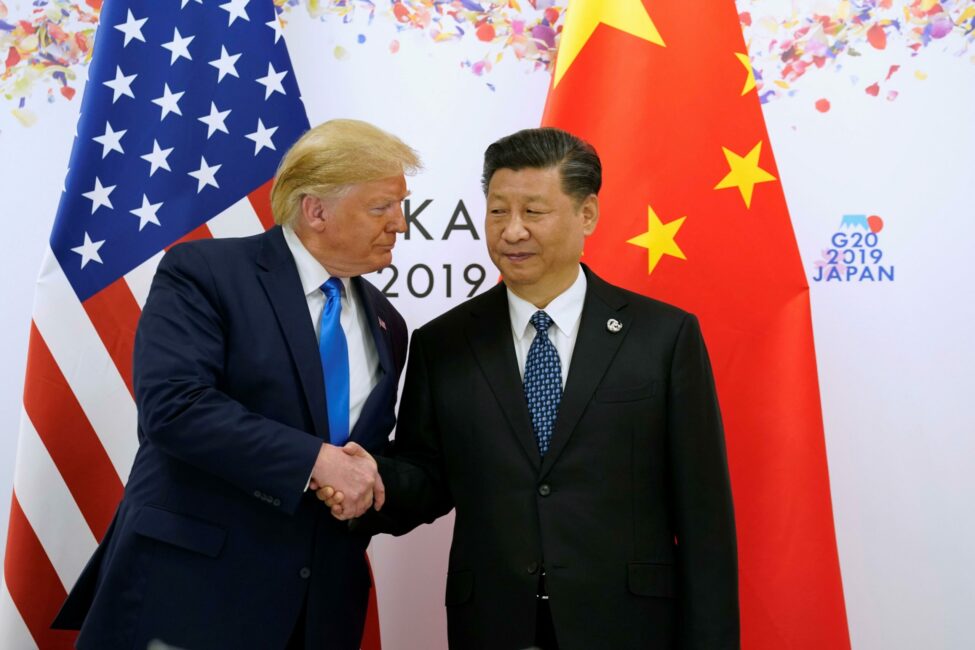
Photo: Alamy
President Donald Trump said Monday he has accepted an invitation from Chinese leader Xi Jinping to visit Beijing in April and that he has invited Xi to make a state visit to the United States later next year.

The president announced the planned visits hours after a phone call with Xi in which the two leaders discussed Ukraine, fentanyl and other issues. The call came nearly a month after they met face to face in South Korea.
“Our relationship with China is extremely strong!” President Trump said.

China released its own summary of the call but did not mention any state visits. According to Beijing’s readout, the leaders discussed trade, Taiwan and the war in Ukraine.
Xi reiterated China’s claim over Taiwan, telling President Trump that the island’s return to the mainland is “an integral part of the post-war international order.” He also expressed hope for a “fair, lasting, and binding peace agreement” for Ukraine, according to the Chinese foreign ministry.
The conversation came days after Japanese Prime Minister Sanae Takaichi said Japan’s military could play a role if China moved against Taiwan. Japan is a key U.S. ally in the region, and Takaichi’s comments drew sharp condemnation from Beijing.
The call also aligned with renewed efforts within the Trump administration to end the war in Ukraine.
During the call, Xi said the United States and China, which fought on the same side in World War II, should “jointly safeguard the victory of World War II.”
The United States maintains a position of strategic ambiguity on Taiwan’s sovereignty, stating it opposes any attempt to take the island by force. U.S. law requires Washington to ensure Taiwan has the defensive capability to deter an attack.
Trump has not publicly committed to sending U.S. troops in the event of a conflict in the Taiwan Strait, but his administration has pressed Taiwan to increase defense spending.
Earlier this month, Taiwan’s foreign ministry said it had been notified of Trump administration approval for a $330 million arms sale that includes fighter jet parts. Beijing protested the deal, saying it “grossly violated” the one-China principle. “China deplores and opposes that,” Chinese foreign ministry spokesperson Lin Jian said at the time.