

Photo: Alamy
U.S. Senate Democrats on Wednesday once again failed to stop the Iran War, drawing questions about the protracted timeline of the conflict and how it ties into the War Powers Act.
This latest attempt appears to have failed for the seventh time since the start of the Iran War. According to The New York Times, the effort failed 50-49, but notably included one new Republican yea vote, Alaskan Sen. Lisa Murkowski, who joined Republican Sens. Rand Paul (Ky.) and Susan Collins (Maine) in supporting the action.
One Democrat broke ranks and cast a nay vote: Sen. John Fetterman of Pennsylvania.
One Republican senator was absent on Wednesday, however, which means that had Fetterman not voted against the measure, it may have passed, per the outlet. Had the vote been tied, it would have required Vice President Vance to break it.
The Senate’s efforts to stop the Iran War come at a confusing moment. Just days ago, President Donald Trump notified Congress that the hostilities between the United States and Iran, beneath the combat umbrella of Operation Epic Fury, had been “terminated.”
“There has been no exchange of fire between the United States and Iran since April 7, 2026,” President Trump said in his notification letter to Congress. “The hostilities that began on February 28, 2026, have terminated.”
The president was required by law, on a 60-day deadline, to either terminate hostilities abroad or request congressional authorization to continue military operations, per the War Powers Act of 1973.
However, U.S. military forces remain engaged in the Middle East, and the U.S. is currently deadlocked in a stagnated ceasefire with Iran. The Strait of Hormuz – the key shipping channel controlled by Iran – remains largely closed. Therefore, the conflict has not been completely resolved.
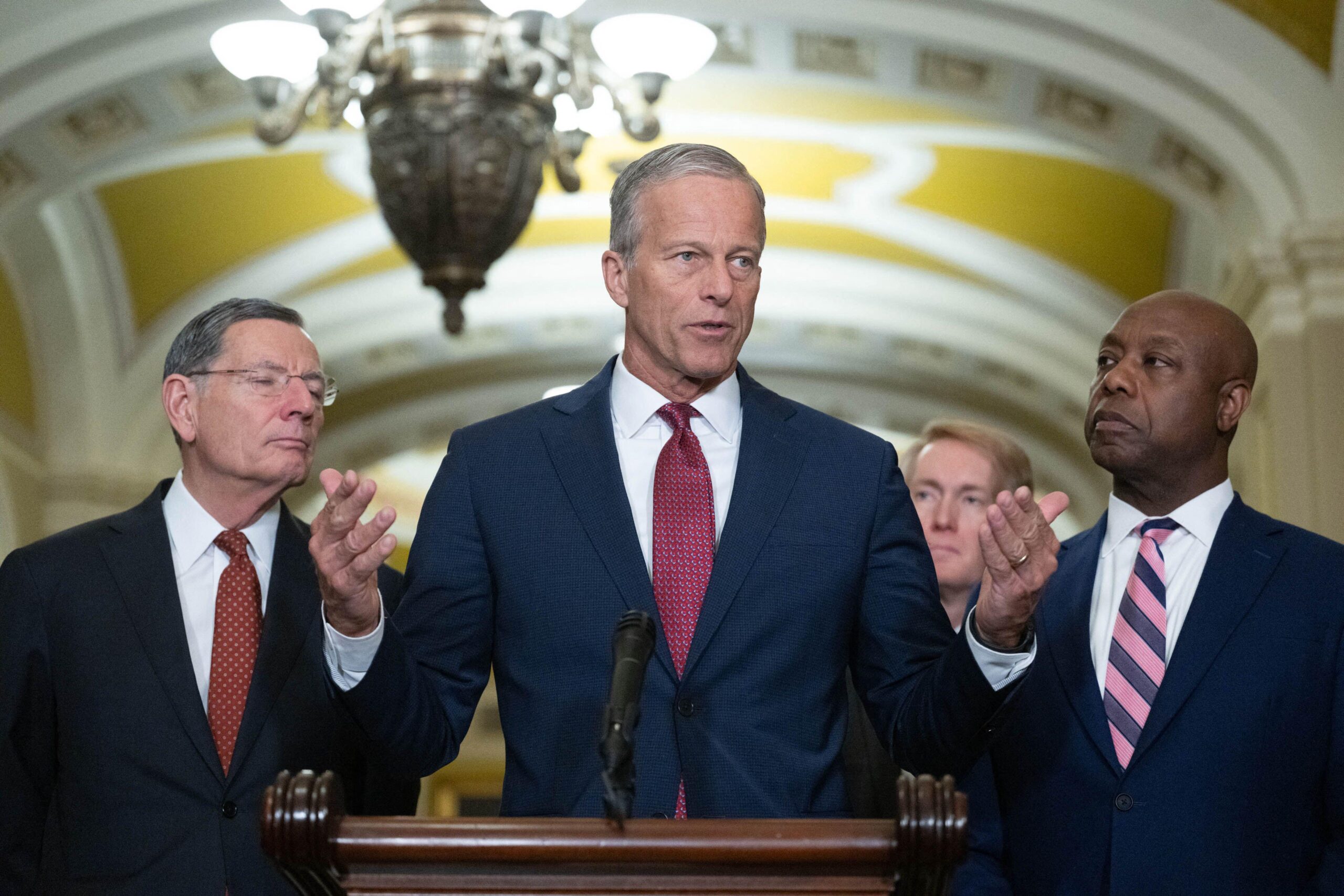
Senate Majority Leader John Thune (S.D.) highlighted the importance of Republican unity in the Upper House as lawmakers headed into the vote.
“…I think it would be best if everybody hung together and supported the president,” he stated, per CBS. “But we’ll see. People have their own minds about some of these issues.”
