

Photo: Alamy | Analysis by Summer Lane
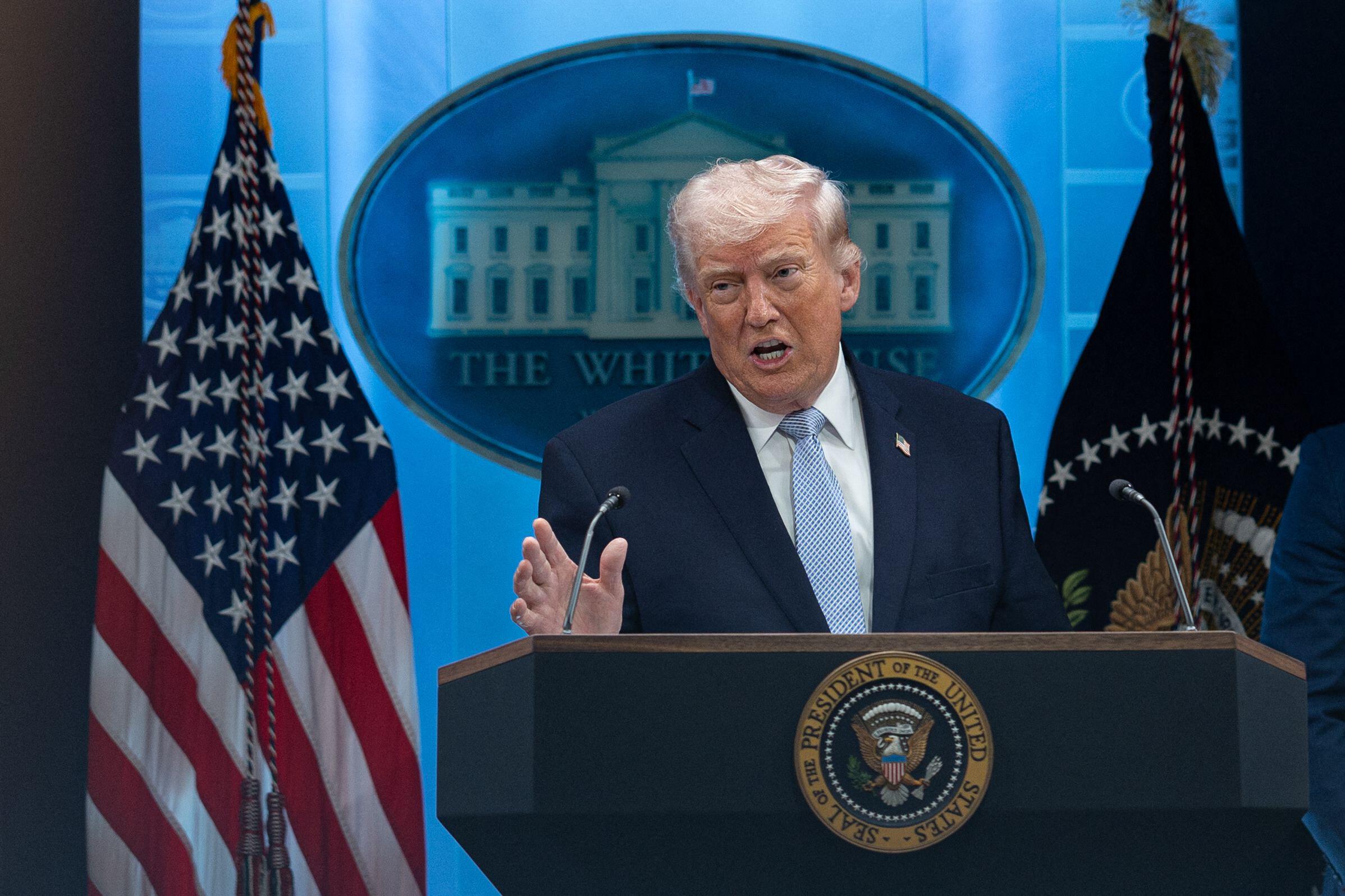
President Donald Trump’s intense displeasure with NATO has been apparent for everyone to see as the war with Iran has unfolded, leaving some to wonder if it’s possible that the U.S. could leave the alliance.

The president suggested leaving NATO to fend for itself after the coalition failed to help secure the Strait of Hormuz over the last few weeks, spurring the president’s criticism. He called NATO a “paper tiger” and said the alliance should “have to start learning how to fight for yourself, the U.S.A. won’t be there to help you anymore, just like you weren’t there for us.”
And, following President Trump’s meeting with NATO Secretary General Mark Rutte this week, the criticism has only increased. “NATO WASN’T THERE WHEN WE NEEDED THEM, AND THEY WON’T BE THERE IF WE NEED THEM AGAIN,” President Trump wrote on Truth Social.

As reported by RSBN, Mr. Rutte did not say whether he had discussed the United States’ potential withdrawal from the coalition with President Trump this week, but the White House acknowledged that it’s not out of the realm of possibilities.
But what would such a withdrawal mean for the world? While the United States doesn’t really need NATO, how would such an exit impact global geopolitics?
NATO doesn’t have any real enforcement power in the United States – a fact that was glaringly made obvious when President Trump threatened to impose tariffs on NATO nations that opposed his pursuit of Greenland.
Potentially, the United States exiting NATO creates a situation where domestic and foreign war hawks could try to push America into another Middle Eastern conflict, this time with Turkey.
Currently, the U.S. and Turkey are both member nations of NATO. The United States, working together with Israel, could conceivably move to strike Turkey in the future if the U.S. were no longer part of the coalition.
To be clear, this isn’t something that has been suggested by the Trump administration, but the rhetoric has already bubbled up in Israeli media. “A new Turkish threat is emerging,” said former Israeli Prime Minister Naftali Bennett this year. “We must act in different ways, but simultaneously against the threat from Tehran and against hostility from Ankara.”
Israel’s joint partnership and longstanding alliance with the United States was a primary mechanism in driving the war against Iran, so it’s not out of the question that a conflict with Turkey – seen by many Israelis as an emerging threat in the region – could be the next potential hotspot.
In an opinion piece written for The Jerusalem Post, Sinan Ciddi and Natalie Ecanow suggested that Turkey could be the “region’s next ‘bogeyman’,” describing it as a “maturing adversarial regime with an established track record of undermining its Western allies.”
They argued that Turkey is far too friendly with Hamas, with a history of terrorist sympathies: “The greater danger is not mislabeling Turkey as Iran. It is continuing to treat Turkey as a normal ally when it no longer behaves like one. Turkey is not the ‘new Iran’ in a literal sense – but it is no longer a reliable NATO ally.”
Do Turkey’s increasingly ambitious goals of expansion in the Mediterranean pose a threat to Israel? Many believe it does. Regardless, if either Turkey or the United States exits NATO, it raises the question of whether another Middle Eastern conflict could arise.
“Trump wants to leave NATO because Turkey is a member, and war with Turkey is next up from the donor class,” said Mike Cernovich, conservative commentator.
This is pure speculation, but it seems that, in Washington, there are always those who want war, so it’s not an impossibility down the road. So far, President Trump and Turkish President Recep Tayyip Erdogan have maintained a positive relationship. This peaceful friendship is better for the world, so Americans should simply hope that it stays that way.
