

Photo: Alamy
When Americans voted for President Donald Trump in 2024, he was backed by Independents, Libertarians, former Democrats and millions of Americans who sought to put America First. The American people were being invaded at the southern border, suffering crippling prices everywhere and had gone through more political theatre than Marie Antoinette.

The nation was suffering from weak leadership. President Trump’s strong first term told voters everything they needed to know. He was a fierce defender of America and its culture, and he didn’t tolerate threats.
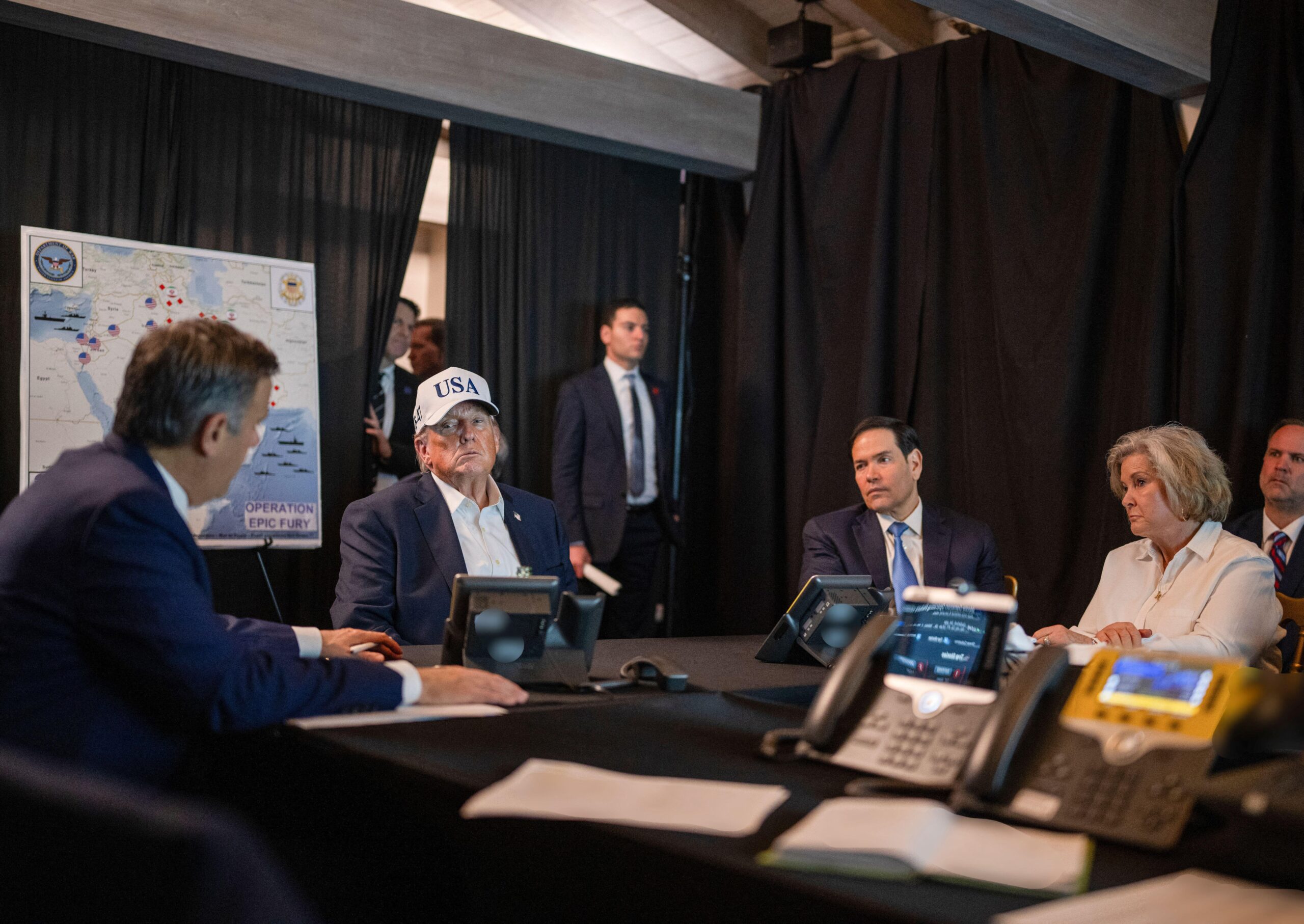
Now that strikes against Iran have begun, it is important to remember the hand that the United States played in aiding the tyrannical Islamic Republic and why this battle has as many domestic interests as it does foreign.

In 1979, Jimmy Carter was president. He was a weak leader. Islamic Republic founder Ayatollah Khomeini was in exile in France. Far-left Iranian liberals were pushing their Marxist ideology on college campuses, and things were heating up. Khomeini took this opportunity to seek Carter’s help in returning to Iran. He claimed he could prevent a civil war. Carter would not support the sitting shah in power, Mohammad Reza Pahlavi, and Khomeini returned to Iran, quickly gaining control of the military.
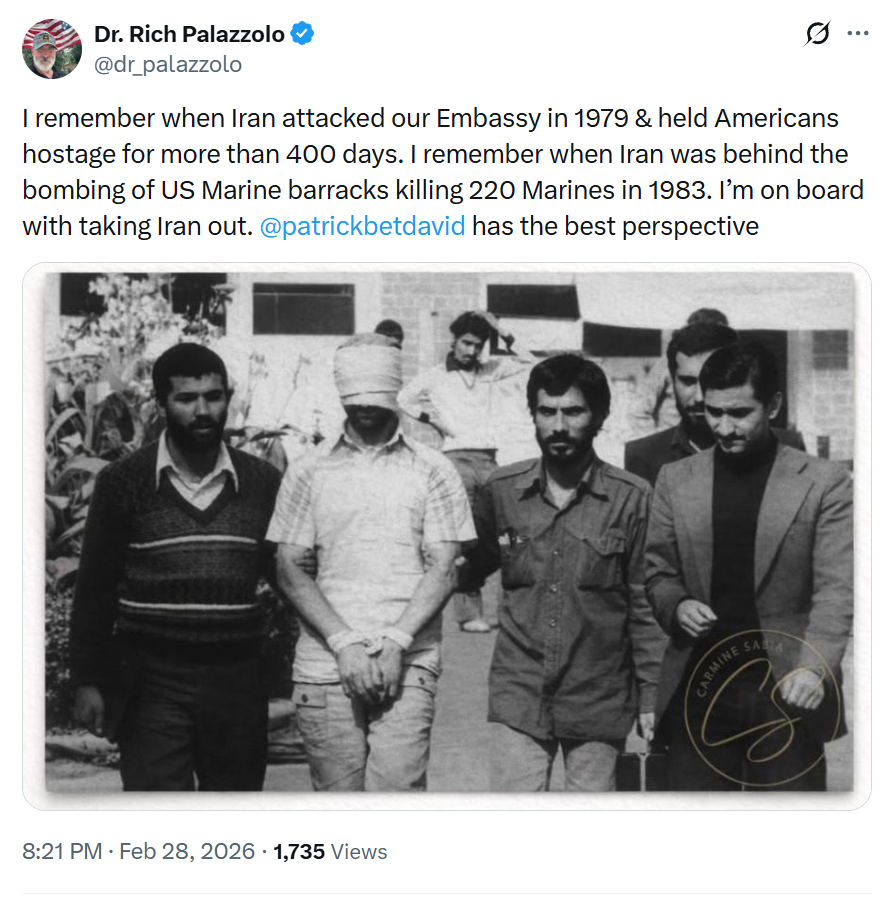
The effects were devastating. Islamic extremism became the law of the land. For the past 47 years, Iran has continuously attacked Americans in the Middle East and its own people. Then, in 2015, Barack Obama handed over a total of $1.7 billion in cash to Iran against the advice of the U.S. Justice Department.
But there is still more to this story. The Middle East has been a proxy war playground for world powers during that time frame as well, and the United States’ biggest adversaries have developed lengthy Iranian connections.
Iran has been selling oil to China in exchange for China’s technological and military advances. China has also been helping the Islamic Republic improve its infrastructure by building bridges, railroads and other structures.
Russia’s ties to Iran are much more complex. Iran sought to ally with the Soviet Union to gain more independence in 1959, but the communist influence over younger Iranian people tore apart the nation’s fabric, leading to the 1979 uprising. After the Soviet Union Collapsed, the ties between Russia and Iran were shakier. In the 90s, Russia sought to ally with nations to combat America’s global influence, but for political purposes.
Russia has Iran’s support for the War in Ukraine and uses the Iranian Shahed drone to carry out strikes. While Russian officials claim that the Iranian conflict will have little impact on Russia’s fighting capabilities, striking at Iran cuts to the heart of two major issues for the United States: the ongoing War in Ukraine and the growing threat of China’s global infiltration.
Whether it is the U.S.’s job to acknowledge Carter’s major 1979 blunder or not, the War in Iran isn’t just about foreign adversaries; it also gives our nation the ability to bolster our domestic policies.
In January, the U.S. Department of Energy reported that oil production had hit record levels in 2025 and will continue to do so. This provides the energy independence needed to stabilize oil prices despite the conflict and could draw in new customers. As more Middle Eastern countries ally with the U.S., China may be forced to purchase American oil, which would bolster the nation’s wealth like never before.
In addition, by cutting Russia’s ties to Iran, the United States is in a better position to negotiate an end to the War in Ukraine—whether Russian officials admit it or not.
Furthermore, Americans have witnessed the Islamification of the West. France, Germany and the UK have all undergone serious cultural shifts due to the spread of Islamic migration. The tyranny of Islamic extremism that devastated Iran has spread throughout much of Europe and is now on American shores.
The number of Muslims in the U.S. nearly doubled in recent years, and illegal Sharia courts that undermine the American Constitution have reportedly been operating in Texas. Over the weekend, an Islamic extremist attacked Americans in Texas, raising concerns of sleeper cells awakening in the U.S.
Domestic Terrorist Attack in Texas
— ThePersistence (@ScottPresler) March 1, 2026
A naturalized U.S. citizen from Senegal — Ndiaga Diagne — opened fire in Austin, killing 2 & injuring 14 others.
The terrorist was wearing a sweatshirt that said, “Property of Allah.”
He had on an undershirt with an Iranian flag on it.… pic.twitter.com/XYlfUquK5S
President Trump has always stood his ground with Iran. In 2018, his administration reimposed sanctions on the Islamic Republic and pressured European nations to stop negotiations with it, which delivered a hefty impact on Iran’s economy. Trump then used military force against Iran in 2019 after the nation reportedly attacked U.S. troops.
After regaining office for his second term, President Trump led strikes on Iran to end the 12-day war between Iran and Israel, delivering swift blows to end the conflict. He has repeatedly, publicly warned Iranian officials not to harm Americans, and not wavered in standing up to the Islamic Regime.
While most Americans prefer the peace element of “peace through strength,” the War in Iran is not a simple situation. It is rife with complex elements that connect foreign and domestic policy in one explosive history that has come to a head in the present and will most definitely affect our future.
