

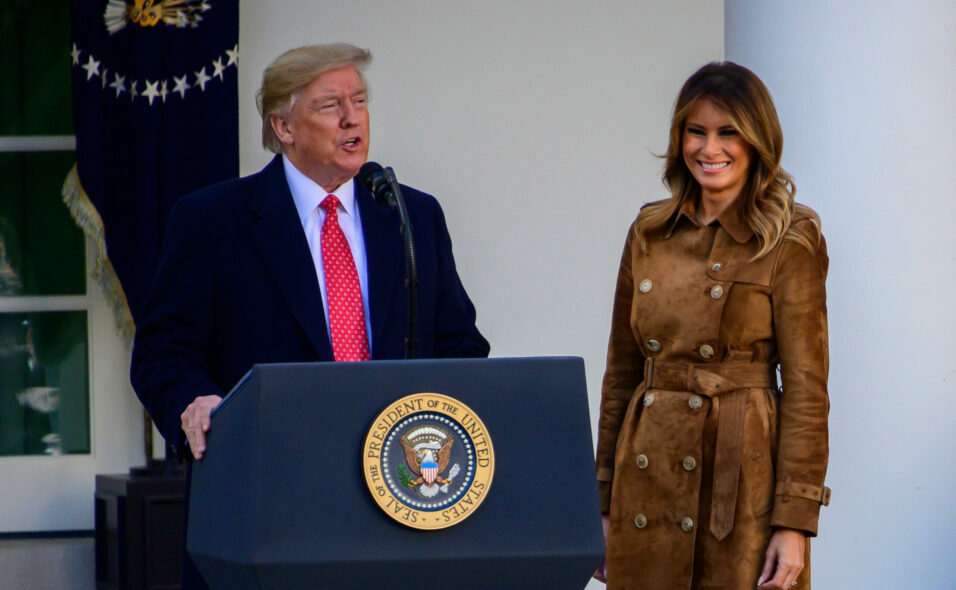
Photo: Alamy | Analysis by Summer Lane
This year, Thanksgiving looks a little different: President Trump is in the White House, presidential election tension is over, and the nation is nearly one year into the second term of the Trump administration.

Yet amid the hustle and bustle of holiday planning and the political bravado unfolding in Washington, D.C., the vast majority of Americans are still feeling the sting of high housing prices and the overall crushing cost of living.
The Trump administration has admittedly gone above and beyond in its first several months to directly address these Biden-era economic problems by implementing important policies. Fair trade and tariffs, for example, and domestic energy production come to mind.

“2025 Thanksgiving dinner under Trump is 25% lower than 2024 Thanksgiving dinner under Biden, according to Walmart,” President Trump said in a statement on Thursday.
He added, “My cost[s] are lower than the Democrats on everything, especially oil and gas! So the Democrats ‘affordability’ issue is DEAD! STOP LYING!!!”
And while Walmart reportedly does have cheaper grocery prices this year – along with other major stores like Target, Aldi’s, and Schnuck’s – the economy is hardly running full steam ahead.
Secretary Bessent’s ‘recession’ comments
For the average American, life is still exorbitantly expensive. Only one-third of 30-year-olds in America today own a home, thanks to skyrocketing home prices and non-competitive wages.
And food prices, while Walmart’s Thanksgiving food may be cheaper than last year, are still expensive when compared to a decade ago, for example.
According to the USDA, food prices have been rising faster than inflation, and these already-high prices are expected to rise another 2.7 percent for all food in 2026.
“I believe that we are in a transition period here as we are seeing, the Trump administration has cut back on government spending…what has gone unnoticed during this shutdown…the government spent less than it did a year before,” U.S. Treasury Secretary Scott Bessent told CNN this week.
When pressed about whether he believed the U.S. was at risk of a recession if the U.S. Federal Reserve did not drop its rates, Bessent responded, “I think we’re in good shape. I think there are sectors of the economy that are in recession. The Fed has caused a lot of distributional problems with their policies.”
He pressured the Fed to lower mortgage rates so that Americans could buy homes and therefore end the “housing recession.” He also said that there were “sections of the economy that could go into recession.”
The Trump administration is headed in the right direction
To be clear, prices in America have not stopped rising, but the rate of increase has slowed down substantially – a good sign after four years of Biden-fueled price madness. To put this in perspective, as reported above, the USDA projects that all food prices will rise about 2.7 percent in 2026.
During the Biden administration in 2022, food prices rose by 9.9 percent in just one year.
Clearly, the Trump administration’s policies are quickly working to stop price-spiking, and they’ve done most of this simply by cutting unnecessary government programs. And when it comes to food pricing specifically, keep in mind that under Democrat policies that propagate massive multi-billion-dollar welfare programs like SNAP, grocery prices will always continue to rise for the average consumer.
In 2023, during the Biden administration’s hard push to expand food stamp benefits nationwide, the Congressional Budget Office said this would cost the country about $1 trillion and, according to the Foundation for Government Accountability, result in a 15 percent increase in grocery prices, per Supermarket News.
Clearly, government meddling in the consumer market helps no one. In fact, federal overreach and socialist welfare programs have contributed massively to the price disaster the country is suffering with now – and the Trump administration’s work to undo this train wreck has been as swift as it can be, considering the state of the smoldering wreckage Biden left behind.
It’s also important to remember that economic relief takes time to trickle down to the middle class.
President Trump’s policies are a huge help, but Republicans must do more. Currently, the only meaningful legislation that the GOP-controlled House has managed to pass is the “One Big Beautiful Bill” earlier this summer.
With just one year to go until the 2026 midterms, critical America First policies must be passed and signed into law to permanently ensure that lower tax rates and critical agenda items are here to stay, or the pricing crisis is unlikely to improve beyond President Trump’s term.
